

The historic contest of English & Australia teams has been illuminated by unforgettable personalities. Here, enthusiasts celebrate personal most cherished stars across the men's Ashes timeline.
The Pugnacious Bairstow
On the topic of a preferred cricketer, the pick falls on Jonny Bairstow. His journey in Ashes contests aptly captures the highs and lows of an English career. It started with 2013, when he tempered his natural instincts to dig in with Ian Bell. That winter, he stepped up to replace gloveman the injured Matt Prior, confronting the formidable Mitchell Johnson having no red-ball preparation for three months.
He enjoyed an Ashes-winning return in 2015 and remains the sole English player to have scored two away Ashes centuries after the year 2011, a feat accomplished in spite of ferocious media scrutiny. A poor series came during the 2019 Ashes, although there was a vital contribution in the Leeds Test assisting the famous run chase by Stokes and Leach. After returning in 2023, a magnificent 99 not out in Old Trafford would have been denied a match-winning status by persistent rain.
The Inimitable Syd Barnes
No bowler inspire such awe as the phenomenal Syd Barnes. His figures of 13 for 163 across 80 overs in the second Test remains as a monument to his skill. One can only wonder how much more he could have accomplished had he been a less difficult man to manage. Boasting a staggering haul of 6,229 wickets with a cost of 8.33 runs, many consider the finest bowler ever. Reading about his statistics as a youth was completely enthralling. What a a glorious bastard, simply without equal. In the words of cricket administrator Billy Griffith: “The extraordinary thing about him is that all his contemporaries considered him the greatest bowler. There was never any doubt about it.”
Richie Benaud
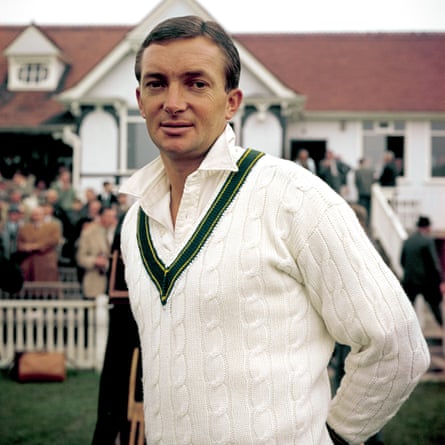
To countless fans, the favourite player is the legendary Richie Benaud. A move to high school during 1961 coincided with that year's Ashes, where the magic was provided by the dashing skipper. Benaud didn't look like other cricketers; he possessed style combined with audacity, offering difference to the seemingly sedate approach. He was eloquent, commanding captain who came known for positive, thrilling cricket.
Memories from that season, when a permanent passion for the game began, centre on the final day at the fourth Test. Watching intently a television, the viewer saw the home side chase 256 runs. A promising beginning had Ted Dexter construct a widely acclaimed one of the great Ashes innings. However he fell for 76, taken by wicketkeeper Wally Grout bowled of Benaud. Hope remained as captain Peter May arriving to bat. Benaud bowled and May deflect the ball to the on side. Next up, he pitched outside leg, it turned sharply from the rough to bowl him. May was dismissed for a duck, the silence deafening. Richie won the match with figures 6 for 70 and the visitors retained the Ashes. A moment of mixed emotion—desperate for an England win yet marvelling at a true hero.
The Indefatigable Ian Botham
He is England's finest all-rounder. Relentless, heroic, exceptional. Remember his heroics at Headingley in '81, the exploits at Old Trafford that same year, the triumphant 1986-87 Australian tour, not forgetting his famous retort directed at the bowler Merv Hughes. An icon not just for his philanthropy but also his immense strength of character.
The Underrated Harry Boyle
History often overlooks figures like Harry Boyle, who should certainly be in the top 100 key figures of Ashes history. Boyle was Fred Spofforth's new-ball partner in the famous Oval Test of 1882, and his contribution proved just as crucial as his partner's to secure the win. In fact, it was Boyle who dismissed tailender Edmund Peate to clinch the match. While Spofforth is rightly hailed as the father of pace bowling, Boyle proved humble , self-effacing, always prioritising the collective. This modesty has led to his memory being overshadowed, even though at his passing highly regarded as an important personality in the sport's development.
Don Bradman
The choice must be Don Bradman. While Shane Warne stands as a giant, the sheer weight of scoring Bradman amassed against England, coupled with his shrewd captaincy, cements his status as more than a great player but as the definitive answer. An Ashes average just shy of ninety, two scores over 300, including a brilliant double-hundred following an ingenious move to flip the batting order and shield his main batters from a damp wicket at the MCG during 1937.
Though not from his era, every enthusiast learns about his deeds from the early 1930s and the Invincibles tour. Whilst many recall his last innings zero that denied him a three-figure average, some treasure images of his practice for hours against a water tank, or seeing him withstand the brutal Bodyline series and still emerge with a 56 average during a notoriously difficult series for batsmen. He endures as the ultimate batsman for countless fans.
Mike Brearley
He elevated the art of captaincy, so vital in cricket, to a new level. He defined an era showing that success in the Ashes, especially down under, needed not just hard work and power. He inspired with considered, intelligent leadership, fostering a culture where his team's abilities thrived. His reading of the game, the match state, and player psyches excelled precisely when a shift in momentum was needed.
His was a beautifully subtle, subtle method {that challenged|contradict


